


Anaesthesiology
Anaesthesia in children
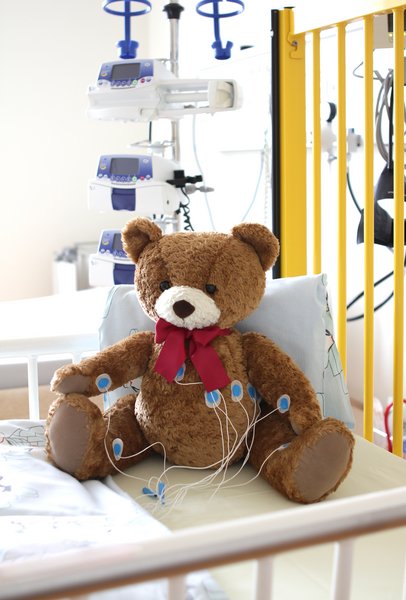
Children are not small adults. That's why we are working hard to meet the special needs of our young patients.
Our anaesthesiologists will make sure that your child sleeps quietly and feels no pain during an examination or surgery. Depending on the age and health of the child and the procedure planned, doctors may use different methods of anaesthesia:
- General anaesthesia (general anaesthesia)
- Regional anaesthesia (local anaesthesia)
- Combination anaesthesia (combination of general and local anaesthesia)
- Sedation (twilight sleep)
Pre-treatment consultation
There will be a pre-treatment consultation in our outpatient anaesthesia department to address all aspects and answer questions that are important for your child's anaesthesia. Please ask us if you are unsure. The anaesthesiologist will work with you to choose the most appropriate anaesthetic procedure for your child.
Pre-surgery
Before the operation, your child will be given an anaesthetic that will act locally on the skin, usually the backs of both hands. This makes the skin less sensitive to pain so that the insertion of an infusion cannula is less of a problem. Depending on the child's age, surgery, and anaesthesia procedure, the child is also given a sedative syrup. You may accompany your child to the surgical area where he or she will be handed over to the anaesthetist. We will ask a parent to be present at the induction of anaesthesia only if a child does not want to be left alone.
Waking up painlessly and safely
The anaesthesiologist will be present throughout the operation or examination procedure and make sure that your child comes out from anaesthesia painlessly and safely.
Depending on the operation, special pain treatment may be needed for a few days. In our clinic, this is done either by a regional anaesthetic procedure or an analgesic infusion pump which puts the analgesic into the vein. In this case, the children are managed by our expert analgesia team.